
Dünyanın farklı lokasyonlardaki ofislerimizin iletişim bilgilerine ulaşın, e-ticaret ile ilgili merak ettiğiniz her konuda bizimle iletişime geçin.
E-ticaret yazılımlarımızı kullanan müşterilerimize hem telefon ile, hem de ticket ile destek vermekteyiz.
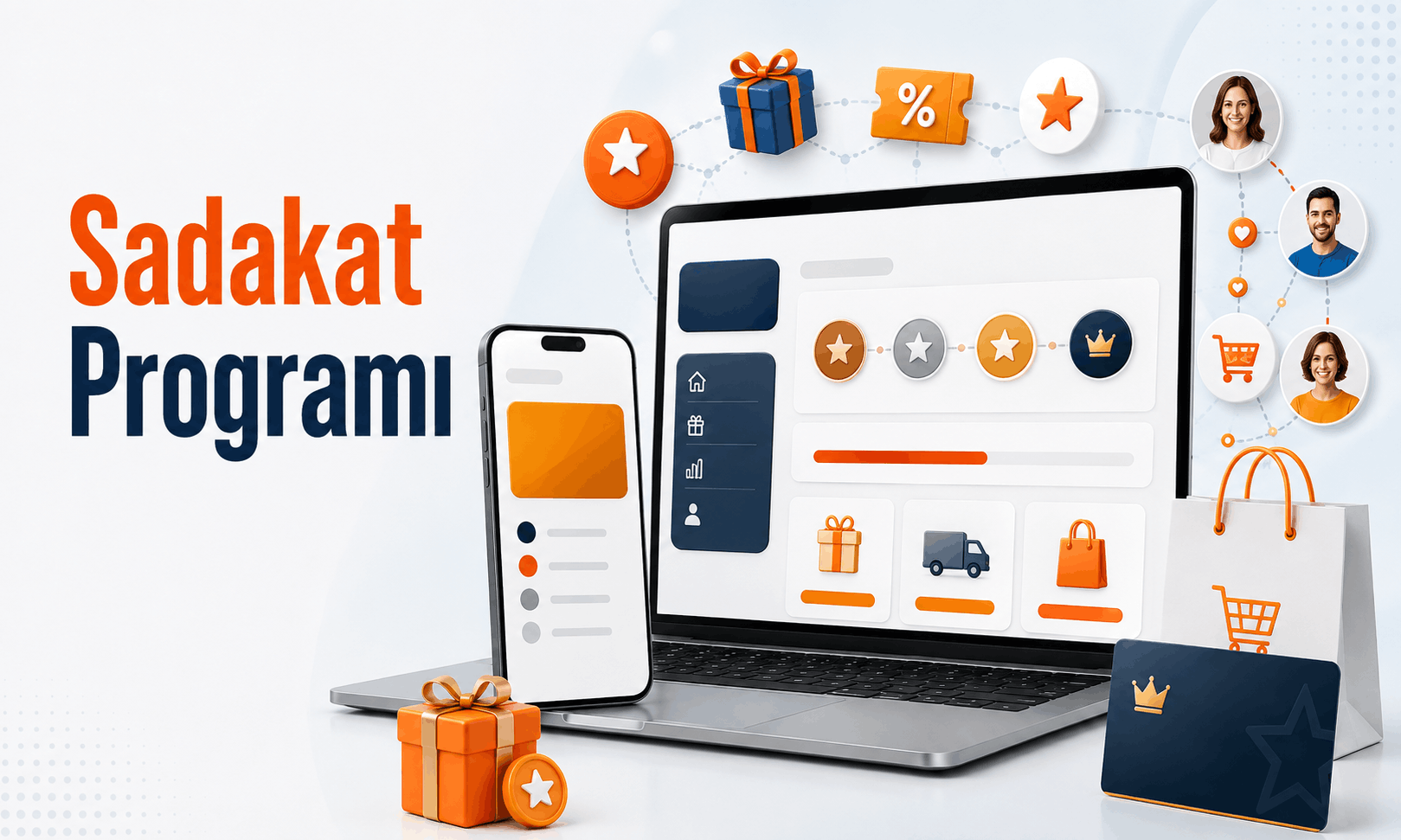
What Is an E-Commerce Loyalty Program and How Is It Created?
Getting a customer to place their first order is an important achievement. The real challenge is encouraging that customer to choose the same brand again when another shopping need arises. Continuously running ads or offering deeper discounts during every campaign period is not enough to create lasting loyalty. A well-designed loyalty program gives customers a clear, measurable, and personalized reason to return.
What Is a Loyalty Program?
A loyalty program is a structured rewards system in which customers earn points, privileges, discounts, gift vouchers, or special services in return for their purchases and interactions with a brand. The goal is not only to increase the number of purchases. Building continuity between the brand and the customer, making customers feel recognized, and increasing long-term value are also among the system's key objectives.
For a program to be considered successful, the benefit it provides to customers must be clear. Users should be able to easily see how many points they have earned, where they can use them, and when the benefits expire. Complex rules, rewards that are difficult to reach, and unclear terms of use can drive customers away from the system rather than encouraging loyalty.
Why Is an E-Commerce Loyalty Program Important?
E-commerce businesses allocate budgets for advertising, content, marketplace commissions, and campaigns to reach new customers. When no relationship is established with the customer after the first order, this investment may be limited to a single transaction. Customer loyalty initiatives support repeat purchases from acquired customers, allowing businesses to benefit from their acquisition costs for a longer period.
Loyalty systems can also enrich the first-party data obtained directly by the brand. When order frequency, preferred categories, benefits used, and shopping periods are analyzed through appropriate consent processes, more relevant offers can be prepared. First-party data is considered a valuable resource for segmentation and personalization because it consists of information collected directly by a business through its own channels.
What Are the Types of Loyalty Programs?
Points-Based Loyalty System
The points model is based on customers earning points in return for their purchase amount or defined behaviors. Placing an order, leaving a product review, or purchasing from a specific category can be assigned different point values. Accumulated points can later be converted into discounts, gift vouchers, free shipping, or benefits on selected products.
Tiered Membership Program
In a tiered model, customers are divided into different statuses based on spending amount, order count, or engagement level. Levels such as Bronze, Silver, Gold, and VIP create a sense of progression. Customers who reach higher tiers can be offered higher point rates, early access to campaigns, or special services. The important point is that the conditions for reaching the next level should be accessible and visible.
Paid and Privilege-Based Programs
In paid programs, customers receive ongoing benefits in return for a specific membership fee. Free delivery, special prices, or priority support can be examples of this model. In privilege-based structures, benefits such as early access to new products, exclusive events, and personalized services stand out instead of financial discounts. The model should be selected according to the product category and the customer's shopping frequency.
How Do You Create a Successful Loyalty Program?
The setup process should not begin by determining the reward rate. First, the problem the business wants to solve should be clearly defined. The goal may be to increase the second-order rate, win back customers who have not shopped for a long time, or retain high-value customers. The program's rules, benefits, and metrics should be shaped according to this objective.
Calculate Reward Economics Correctly
The monetary value of the points to be awarded should be calculated by taking product margins into account. While rates that are too low may fail to attract customer interest, uncontrolled benefits can reduce profitability. Point-earning and redemption rates should be modeled together, and situations such as returns, cancellations, promotional products, and discount coupon usage should be defined in advance.
Make Participation and Usage Easy
Customers should not have to read lengthy explanations to understand how to join the program. The benefit they will receive upon membership should be clearly displayed, their point balance should be accessible from their account area, and available rewards should be visible at checkout. When the program is easy for customers to understand, the likelihood of using the benefits offered also increases.
What Data Should Be Tracked in a Loyalty Program?
A customer loyalty program should not be evaluated solely by the total number of members or points distributed. The repeat purchase rate of program members, order frequency, average order value, reward redemption rate, and customer lifetime value should be tracked together. Comparing the behavior of member customers with that of customers who do not participate in the program provides a clearer view of the system's actual contribution.
The percentage of points earned but not redeemed is also an important indicator. A 2026 global loyalty study reports that 27% of points earned during 2025 remained unspent. This shows that distributing large amounts of points alone does not create customer value; rewards also need to be accessible and easy to remember.
Common Mistakes Made in Loyalty Programs
One of the most common problems is turning the program into a campaign tool that constantly distributes discounts. If customers shop only for the price advantage, loyalty may weaken when the discount ends. A well-designed rewards program should create different forms of value alongside financial benefits, such as status, convenience, personalization, and exclusive access.
Another mistake is applying the same rule to all customers. The expectations of a customer placing their first order are not the same as those of a customer who shops regularly. An incentive that encourages a new member to place a second order may seem ordinary to a high-value customer. Therefore, customer segmentation helps create more meaningful point rates and communication scenarios.
How Should Personal Data and Transparency Be Managed?
Because contact information, shopping history, and behavioral data may be processed in loyalty systems, personal data processes should be addressed separately during program design. Membership terms, data processing purposes, storage methods, and customer rights should be clearly explained. Privacy notices and explicit consent processes should not be confused with one another; permissions should be based on specific purposes.
Decisions by Turkey's Personal Data Protection Board emphasize that data processing purposes should be clearly stated in explicit consent texts concerning loyalty programs. They also highlight that using a loyalty card or phone number by third parties without verification may create risks of unlawful data processing and security breaches.
How Should a Loyalty Program Work with E-Commerce Infrastructure?
Connecting the program with the e-commerce infrastructure reduces operational errors. Points should be assigned automatically when an order is completed, the balance should be updated when a return occurs, and the customer's status should change according to predefined rules. Manually managed processes can create inconsistencies between the customer's balance and actual order activity.
The history of point transactions, status changes, and reward redemptions should be viewable in the administration panel. Through integrations with CRM, email, SMS, and marketing automation systems, relevant notifications can be sent to customers whose points are nearing expiration or who have moved to a new tier. In omnichannel programs, managing benefits earned by customers in stores and on the e-commerce website within a shared account strengthens the consistency of the experience.
T-Soft, the only company in Turkey offering a loyalty system directly integrated with e-commerce infrastructure, enables this process to be managed without the need for an additional application or separate integration. With the T-Soft Loyalty System, customers can automatically earn points from purchases, memberships, reviews, and referrals and convert their points into discounts or gift vouchers. Ready-made statuses such as Bronze, Silver, Gold, and VIP can be used, while custom tiers can also be created for the brand.
The system allows custom point rules to be defined for categories, cart amounts, customer statuses, and campaign periods. Earned, redeemed, returned, or expired points can be monitored from a single panel, while customer statuses can be updated automatically according to predefined conditions. Thanks to its compatibility with ERP systems, the structure transforms the loyalty program from a campaign mechanism operated separately from e-commerce operations into a direct part of order and customer management. You can explore all features in detail through the T-Soft Loyalty System.
Evaluation: Not a Discount, but a Long-Term Relationship
A successful loyalty program is not merely a promotional mechanism designed to encourage customers to spend more. It recognizes the relationship customers have built with the brand, allows them to track the benefits they have earned, and gives them a genuine reason to shop again. The value of the program should be measured by the sustainable change it creates in customer behavior rather than simply by the number of points distributed.
A system with a defined objective, calculated financial balance, and transparent rules can make a meaningful contribution to repeat purchases, customer experience, and long-term loyalty. For this reason, it is critical that loyalty features work in harmony with e-commerce infrastructure, order management, and customer communication tools.
