
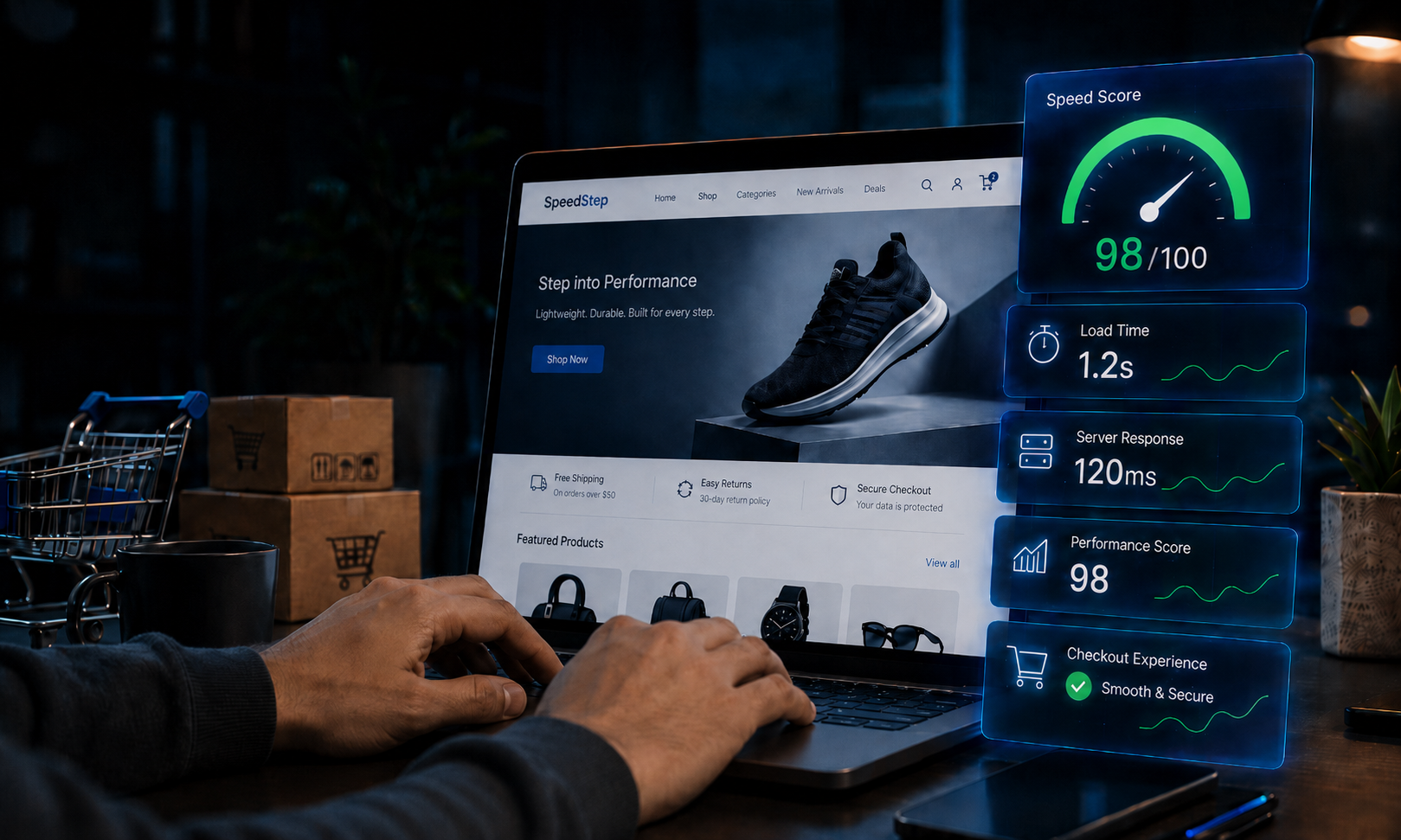
Why Is E-Commerce Website Speed Important? How Is Website Speed Tested?
A user visiting an e-commerce website interacts with many pages, from the category page to product details and from adding an item to the cart to completing the payment process. Even a delay of a few seconds during this process can interrupt the shopping experience. Therefore, e-commerce website speed is not merely a technical performance indicator; it is an important criterion that should be evaluated together with user experience, conversions, SEO, and brand perception.
The impact of website speed on commercial performance has been demonstrated in various studies and case studies. Examples published on Google's web.dev platform show that improvements in site performance can positively affect users' shopping completion rates. A Nuvemshop study published in June 2026 also reported a relative 8.9% increase in the conversion rate of visitors from mobile organic traffic following speed and performance improvements.
Why Is Speed Important for E-Commerce Websites?
The importance of speed in e-commerce becomes apparent from the moment a user enters the website. Slow-loading product images, delayed filters, or a slow response from the add-to-cart button can make customers wait during the shopping process. Especially on mobile devices, connection quality and device performance also come into play, so e-commerce websites need to operate quickly and consistently under different usage conditions. Otherwise, performance issues may cause visitors to repeat the same action or leave the page.
Speed is also important for SEO. Core Web Vitals data is one of the indicators Google uses when evaluating page experience. However, a high performance score alone does not guarantee a higher ranking in search results. Content quality, usability, and the overall user experience also affect SEO performance. Therefore, the goal of speed optimization should not simply be to achieve a high score, but to provide users with a smoother shopping experience.
What Are Core Web Vitals? What Performance Areas Do LCP, INP, and CLS Measure?
Core Web Vitals consist of metrics that help measure the real user experience in terms of loading performance, interaction responsiveness, and visual stability. The current Core Web Vitals set includes LCP, INP, and CLS. When sufficient real-user data is available, Google evaluates Core Web Vitals performance based on the experience of at least 75% of visitors.
LCP: Largest Contentful Paint
LCP measures how long it takes for the largest main content element visible to the user to load when a page opens. A large product image or banner can affect this metric. Google recommends that LCP occur within 2.5 seconds after the page begins loading for a good user experience.
INP: Interaction to Next Paint
INP evaluates how quickly the page provides a visual response after interactions such as clicking a button, selecting a filter, or changing a variant. Google recommends a good INP value of less than 200 milliseconds. INP began being used as a Core Web Vitals metric in place of FID starting in March 2024.
CLS: Cumulative Layout Shift
CLS measures unexpected movement of content while a page is loading. For example, a banner that loads later may push product buttons downward. Google recommends targeting a CLS value of 0.1 or lower for a good user experience.
Factors That Slow Down an E-Commerce Website or Affect Site Speed
E-commerce websites can contain more products, images, integrations, and dynamic operations than traditional corporate websites. Therefore, the source of a performance problem is often not a single factor. The main factors affecting site speed include:
- High-resolution and unoptimized images: Large product photos and banners can increase loading time.
- Excessive JavaScript and CSS usage: Unused or resource-intensive code can slow down the browser's processing of the page.
- Heavy use of third-party applications: Analytics codes, advertising tags, live support tools, and plugins can create additional overhead.
- Insufficient caching: Repeatedly loading the same resources unnecessarily can negatively affect performance.
- Server response times: A slow server response to a request can delay the loading of other resources on the page.
- Uncontrolled integrations: Intensive data exchange with ERP, payment, shipping, and marketplace systems can affect site performance.
- Growing product and data volume: Large numbers of products, variants, and filters can increase database operations.
- High-traffic periods: An increase in visitors and orders at the same time during campaigns can create additional load on the infrastructure.
Therefore, speed evaluation should not be limited to the homepage. Product listing, product detail, site search, cart, and checkout pages should also be examined. Especially during high-traffic periods, how the infrastructure responds to increased visitor and transaction volume is an important indicator of the e-commerce site's actual performance.
Where Can You Test E-Commerce Website Speed?
Evaluating an e-commerce website's speed based solely on user experience may not provide reliable results. Measurements should be taken across different devices, connection conditions, and page types. The following tools can be used to measure site performance and identify potential speed issues:
- Google PageSpeed Insights: Analyzes the performance of a URL. When sufficient data is available, it displays field data from Chrome users together with laboratory data generated by Lighthouse.
- GTmetrix: Helps analyze the page loading process, Web Vitals metrics, and resources affecting performance in greater detail.
- WebPageTest: Allows testing with different device, connection, and location options. It can therefore be used for more technical and scenario-based performance analyses.
- Pingdom Website Speed Test: Enables quick analysis of basic performance data such as page load time, file sizes, and resource distribution.
- Google Search Console – Core Web Vitals: Unlike a one-time speed test, it helps track over time the status of URL groups experiencing performance issues based on real-user data.
Since each tool focuses on different performance data, considering the measurement results provided by multiple tools together allows for a more comprehensive evaluation of site speed.
How Should Website Speed Test Results Be Evaluated?
Focusing only on the overall performance score displayed on the screen in a speed test does not provide a meaningful picture. When evaluating site performance, factors such as loading time, user interactions, page layout stability, and server responses should be examined together. LCP, INP, and CLS values in particular provide important indicators for understanding a site's performance in the real user experience.
It is also important to examine mobile and desktop results separately when testing. A high score on the homepage does not mean that the entire store has the same level of performance. Testing category and product pages with heavy visual content, as well as cart and checkout steps, provides a more realistic evaluation.
A Fast and Smooth E-Commerce Experience with T-Soft
The speed and smooth operation of an e-commerce website depend not only on design and content but also on the infrastructure used. T-Soft, with its powerful infrastructure designed to handle high visitor and order traffic, supports site performance, especially during campaigns and intensive sales periods. This allows visitors to move between pages more quickly and complete their shopping processes without interruption.
T-Soft's infrastructure includes various optimization options that support site speed. Compression features available in the administration panel help files used on pages load more efficiently. Reducing unnecessary data load supports page loading processes while providing visitors with a smoother e-commerce experience.
In addition, T-Soft's professional CDN service helps deliver images and other static content to visitors more quickly. Serving content through different servers helps reduce the load on the main server and allows the site to operate more consistently.
T-Soft's speed- and performance-focused infrastructure solutions contribute to maintaining site performance during high-traffic periods, enabling pages to operate more smoothly and improving the shopping experience for visitors.
Why Should E-Commerce Website Speed Be Monitored Regularly?
E-commerce website speed is not something that can be measured once and considered complete. New banners, product images, applications, analytics tools, integrations, or changes made to the theme can affect performance over time. Therefore, critical pages should be tested at regular intervals and changes in Core Web Vitals data should be monitored.
A fast website alone does not guarantee sales success; however, a slow infrastructure can reduce the impact of investments made in products, marketing, and user experience. Regularly measuring site speed, correctly identifying the source of problems, and working with a scalable e-commerce infrastructure provide a strong foundation for giving visitors a smoother shopping journey from product discovery to checkout.
